Before I say anything else, I want to be really clear: I am not a doctor. I am not a dietitian. I am not a nutritionist. I am just a woman with a complicated body and a long history with wellness who finally found something that worked better for her.
Nothing in this post is medical advice. It's one person's lived experience. As always, take what serves you, leave the rest, and talk to your own doctor or practitioner before you make big changes to your food or your medication.
Okay. Now we can talk about breakfast.
For a long time, I thought I was doing breakfast "right."
High protein. Minimal carbs. The kind of meals every generic "fix your metabolism" article and fitness professional told me to eat. I didn't love it, but I loved the idea that I was doing the disciplined thing.
It also did not work for me at all.
The season my body stopped cooperating
For years, my weight felt like it belonged to someone else.
No matter what I did, it barely moved. I was moving my body. I was tracking everything I ate. I was "eating clean." I was following the usual advice: eat less, move more, prioritize protein, go easy on the carbs. On paper, it looked like I was doing what you're "supposed" to do.
Underneath, a different story was unfolding.
There were things going on that I didn't have language for yet. Hormonal imbalance. Insulin resistance. Undiagnosed thyroid issues that were quietly running the show in the background. I knew something was off, but every time I tried to bring it up, I was met with the same message: try harder, eat less, exercise more.
If you've ever been caught in that loop, you know how crazy-making it is.
The generic advice that backfired
Most of the mainstream advice I followed boiled down to some version of:
- Keep carbs low, especially at breakfast.
- Load up on protein.
- Push harder in your workouts.
There are people for whom that works beautifully. There are conditions where therapeutic carb restriction or higher protein is genuinely helpful.
But there are also bodies and thyroids and nervous systems for whom that combination is like pouring gasoline on the fire.
What I didn't know at the time is that:
- Very low-carb eating can affect thyroid hormone production and conversion, especially over time. Your thyroid actually uses carbohydrate availability as one of its signals.
- Thyroid function, blood sugar, and insulin resistance are all connected, and when one piece is off, extreme restriction can make your body feel even more stressed, not less.
- There is no one "best" diet for hypothyroidism or insulin resistance; people do better on different balances of protein, fat, and carbs depending on their specific picture.
I didn't know any of that then. I just knew I was exhausted, hungry, and not seeing the magic results I'd been promised.
The doctor who finally listened
The real turning point was not a new diet. It was a new doctor.
For the first time, I sat across from someone who did not dismiss what I was saying. Who did not tell me to "try harder" or imply I was lying about my lifestyle or make it seem like I had a willpower or discipline problem. This doctor, who is still my primary care doctor, ran the right labs, looked at the full picture, and said, in effect: "This isn't just about discipline. Your hormones and thyroid are part of this story."
She adjusted my treatment plan. And then, to my surprise, she adjusted my food.
Instead of pushing me toward more protein and fewer carbs, she told me something I had never heard in a medical office:
"You are probably eating more protein than your body needs, and not enough carbohydrates for your thyroid and nervous system to feel safe."
She didn't ask me to make wild changes. I didn't start eating stacks of pancakes and bowls of sugary cereal.
I simply:
- Brought my protein down to a range that made sense for my size and activity level.
- Brought my carbohydrates up, focusing on slower, fiber-rich, whole-food carbs.
- Stopped treating carbs like the enemy and started treating them like fuel.
And here's the part that still feels wild to say: once my treatment was in place and my macros shifted, the scale finally started to move. It moved without dramatic changes in my workouts, my schedule, or my lifestyle.
The biggest shift was not more effort. It was the right support and the right fuel.
Why some of us really do need more carbs
I want to be very clear again: I am not saying everyone should abandon low-carb eating or that high-protein breakfasts are "bad." There are many people and conditions for which those approaches work well.
What I am saying is that there are also bodies, especially those with thyroid issues, certain hormonal imbalances, or long-term under-fueling, that actually function better with more carbohydrates than the internet or common diet culture might lead you to believe.
In my case, my body responded better when it knew carbs were coming regularly, especially in the morning. It didn't have to grin and bear its way through the day anymore.
The warm breakfast for insulin resistance I eat almost every day
Here's where this stops being theoretical.
Most mornings now, I eat some version of the same warm, simple breakfast. It is not fancy. It is not perfectly macro-balanced. It is just kind to my body.
For me, it often looks like:
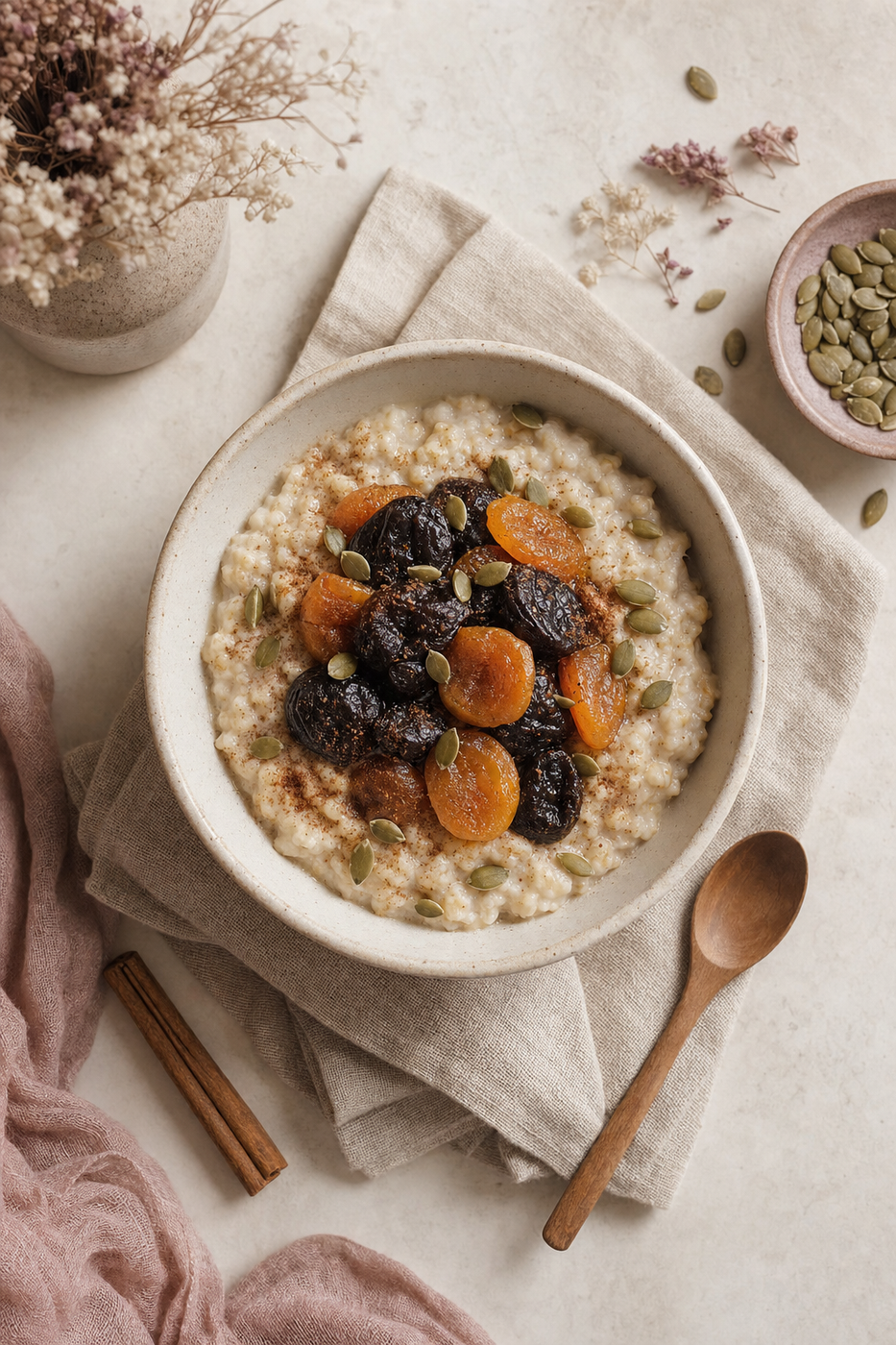
- A warm bowl built on a gentle, complex carb base (usually oatmeal or another whole grain cereal).
- Cooked with or topped with healthy fat: a spoonful of ghee, a drizzle of good oil, or a sprinkle of nuts or seeds like walnuts or pumpkin seeds.
This rounds it out with enough protein to feel steady, but not so much that it becomes the whole point of the meal.
Some days it's classic oatmeal. Some days it's a more Ayurvedic-inspired bowl that would feel right at home in my Gentle Reset: savory kitchari, or a warm whole grain cereal with digestive spices and a little stewed fruit on top.
What matters most about this breakfast is not the exact recipe. It's the way it feels:
- Warm.
- Grounding.
- Filling without being heavy.
- Satisfying enough that I don't spend the rest of the morning crashing or fighting caffeine and snack cravings.
Most importantly for me overall, it's not low-carb.
My simple stewed fruit recipe
One of my favorite ways to make these bowls feel special is to add a spoonful of simple stewed fruit. It's very loosely inspired by Ayurveda and something I make regularly.
Simple Stewed Fruit — for warm cereal or oatmeal
What you need
- Small handful of dried prunes
- Small handful of dried apricots
- Enough water to just cover the fruit in a small pot
- Pinch of cinnamon
- Pinch of cardamom
- Sliver of fresh ginger or a pinch of ground ginger
- Optional: a tiny drizzle of honey or maple syrup (after cooking)
How to make it
- Add the prunes and apricots to a small pot and pour in just enough water to cover them.
- Add the cinnamon, cardamom, and ginger.
- Bring everything to a gentle simmer over low to medium heat.
- Let it cook until the fruit is soft and the liquid has thickened slightly, stirring occasionally.
- Take it off the heat. If you like, add a small drizzle of honey or maple syrup and stir.
Spoon a bit over warm oatmeal or whole grain cereal. Put the rest in a mason jar or airtight container and store it in the fridge. It will keep for the next few days.
That's it. A spoonful or two of this over warm oatmeal or a whole grain cereal makes the whole thing feel like a little self-care ritual instead of "just breakfast."
These same flavors — warm grains, digestive spices like cinnamon, cardamom, and ginger, a bit of ghee, gentle sweetness from honey or maple syrup — show up in the recipes inside my Gentle Reset as well. It's a three-day, Ayurveda-inspired mini reset that leans into this kind of soft nourishment instead of punishment or deprivation.
Why warmth and carbs help my particular needs
On a practical level, this kind of breakfast does a few things for me:
- The warmth helps my nervous system feel calmer and my digestion feel supported.
- The complex carbs give my thyroid and brain a steadier stream of energy instead of a rollercoaster.
- The mix of carbs, fat, and protein keeps my blood sugar from spiking and crashing.
On an emotional level, it also quietly unwound years of fear around food.
For so long, I treated carbs like a dangerous indulgence I had to earn or cancel out. Letting myself eat a warm, carby breakfast most mornings felt like a small act of rebellion at first.
Over time, it has felt more like a small act of trust. Trust that my body knows what to do with food when it is fed, not punished.
That same spirit — gentle, warm, not extreme — is what I tried to pour into the Gentle Reset, too. It's framed as a three-day, at-home retreat: a short window of time where you treat yourself like someone worth caring for, with simple, comforting meals to match.
What I want you to hear, if you're in the thick of it
If you are reading this and you are in that maddening place where your body won't respond the way the internet says it should, I want you to know a few things:
- You are not broken for not thriving on "eat less, move more."
- You are not failing if low-carb, high-protein everything makes you feel worse, not better.
- You are allowed to need more carbohydrates than the people in your feed.
For some of us, especially those with thyroid issues, insulin resistance, or long-term under-eating, the most healing move is not another layer of restriction. It's appropriate medical care, gentler fuel, and a willingness to listen when your body whispers, "this isn't working."
My warm breakfast is not a prescription. It's just one woman's way of feeding a body that has been through a lot.
If you're curious about experimenting with this kind of softer, warmer nourishment over a few days, that's the heart behind my three-day Gentle Reset on Gumroad. It's Ayurveda-inspired, simple, and meant to feel more like a mini self-care retreat than a "cleanse."
And if all you do after reading this is make yourself a warm bowl of something and eat it slowly, that counts too ♥